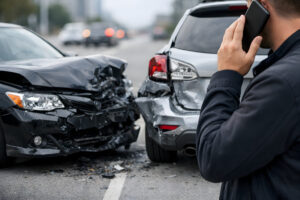
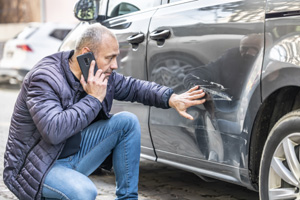
When two drivers give conflicting accounts of how a crash happened, or when the physical evidence at the scene does not match the story either party is telling, the question of what actually caused the accident often cannot be resolved without expert analysis. Accident reconstruction is the application of physics, engineering, and data analysis to the physical evidence left by a collision, producing an objective account of how the crash occurred and which factors contributed to it.
At Byrd Davis Alden & Henrichson, LLP, our Austin car accident attorneys work with experienced accident reconstruction experts on cases where liability is genuinely disputed, injuries are severe, or the physical evidence tells a different story than the other driver’s insurance company is claiming. In serious injury cases, reconstruction evidence can be the deciding factor in whether a family receives full compensation or a fraction of what they are owed.
What Does an Accident Reconstructionist Do?
An accident reconstructionist is a qualified professional, typically an engineer or a law enforcement specialist with advanced forensic training, who analyzes the physical evidence from a crash to determine what happened. Their work produces a systematic, evidence-based account of the crash sequence: where each vehicle was, how fast it was traveling, when braking began, what the point of impact was, and how each vehicle moved after contact.
This analysis draws on established principles of physics, including momentum conservation, energy equations, and time-distance relationships, applied to the physical evidence the crash left behind. The reconstructionist’s conclusions are documented in a formal written report that can be used in settlement negotiations or presented through expert testimony at trial. Courts apply the Robinson standard in Texas to evaluate expert methodologies, requiring that the analysis be based on sufficient data and reliable scientific principles.
Evidence Sources Used in Accident Reconstruction
The quality of a reconstruction depends on the completeness of the evidence available. An experienced reconstructionist draws on multiple sources simultaneously, cross-referencing each against the others to build a comprehensive picture of the crash sequence.
Event Data Recorder and Electronic Logging Device Data
Modern vehicles, including most passenger cars and all commercial trucks, are equipped with event data recorders, commonly called black boxes, that capture vehicle data in the moments before a significant impact triggers the system. This data typically includes vehicle speed, throttle position, brake application status, steering wheel angle, and seatbelt engagement in the three to five seconds before impact. For commercial trucks, electronic logging device data can extend the record significantly further, showing driver hours, speed history, and GPS location data that places the vehicle and driver in context well before the crash occurred.
EDR data is time-sensitive. Federal regulations require commercial carriers to preserve post-crash data, but private vehicles have no such requirement, and the data can be overwritten by subsequent vehicle use. Sending a spoliation letter demanding preservation of EDR data as early as possible after a serious crash is one of the most important steps in any case where this evidence may be relevant.
Physical Scene Evidence
Skid marks, gouge marks in pavement, and tire yaw marks document where vehicles were and how they were moving at specific points in the collision sequence. Skid mark length combined with friction coefficients for the road surface allows a reconstructionist to calculate pre-braking speed. The absence of skid marks can indicate that braking never occurred, which may point to driver inattention or a vehicle mechanical failure. Vehicle damage patterns provide additional data: the height, width, and depth of crush damage reveal the geometry of the impact and help establish vehicle positions and angles at the moment of contact. Airbag deployment data recorded in the vehicle’s sensing systems can corroborate or contradict speed estimates based on skid marks alone.
Camera and Sensor Data
Dashcam footage from either vehicle, traffic camera recordings from nearby intersections, and security camera recordings from surrounding businesses can provide visual documentation of the crash sequence or the pre-crash behavior of either driver. Advanced driver assistance systems, now standard on many newer vehicles, generate their own data on lane departure warnings, automatic emergency braking activation, and forward collision alerts that can significantly inform the reconstruction analysis.
Environmental and Road Data
Weather conditions at the time of the crash, road geometry and grade, traffic signal timing, sight-line distances, and road surface conditions all factor into a reconstruction involving speed or stopping distance questions. Official weather station data, traffic signal records, and road design documentation are all potential sources that an experienced reconstructionist knows how to obtain and incorporate into the overall analysis.
Reconstruction Methods and Analysis
Reconstructionists apply several analytical methods depending on the specific facts of the crash and the evidence available. Time-distance analysis establishes what each vehicle was doing at each point in time leading up to the collision, based on known speeds and measured distances. This method can determine whether a driver had adequate time and space to avoid the crash and whether their reaction was consistent with attentive driving.
Momentum analysis applies the physical principle that momentum is conserved during a collision. By measuring the post-crash positions and orientations of both vehicles and working backward from known crush and weight data, a reconstructionist can calculate what the pre-impact speed and direction of each vehicle must have been. Energy analysis uses the relationship between vehicle speed and crash energy to calculate how much kinetic energy was present before impact, how much was absorbed by vehicle deformation, and how much remained to drive post-crash movement, often cross-checking time-distance and momentum results.
Crash simulation software such as PC-CRASH, HVE, and MADYMO allows reconstructionists to model the crash digitally, running physics-based simulations that test whether a proposed crash scenario is consistent with the physical evidence. These simulation results can be presented visually at trial in a way that juries find accessible and persuasive, particularly in cases where the raw data alone would be difficult for a non-technical audience to interpret.
When Do You Need an Accident Reconstructionist?
Not every crash case requires reconstruction. For low-speed incidents with clear liability and minor injuries, physical evidence and witness accounts are typically sufficient. Reconstruction becomes important in the following situations:
- Liability is genuinely disputed: The other driver, their insurer, or witness accounts conflict materially with your account of the crash, and resolving that conflict determines the outcome of the case.
- Injuries are severe or fatal: When a crash produces catastrophic injury or death, the investment in expert reconstruction is justified by the stakes of the case and the importance of establishing exactly what happened.
- A commercial vehicle was involved: Crashes involving commercial trucks, buses, or delivery vehicles often involve multiple potentially responsible parties, federal regulatory compliance questions, and EDR data that requires expert extraction and interpretation.
- Speed or impairment is denied: When the other driver claims a lawful speed or denies being impaired, physical evidence analysis may be the only way to establish what the crash record actually shows.
- The insurer’s offer is based on a disputed crash account: When a settlement offer reflects a minimized or contested version of how the crash occurred, reconstruction evidence can fundamentally reframe the negotiation before litigation becomes necessary.
Evidence Preservation After a Serious Crash
The value of reconstruction evidence depends on how quickly it is secured. Physical evidence at the scene is often cleared or degraded within hours. Surveillance footage is typically overwritten within 24 to 72 hours unless a formal preservation demand is sent. EDR data can be overwritten by subsequent vehicle use. The sooner an attorney is retained and preservation demands go out, the better the foundation for a reconstruction analysis.
An attorney handling a serious crash case will typically send spoliation letters to the at-fault driver, their employer if a commercial vehicle was involved, and any businesses or entities that may have recorded the crash or the surrounding area. These letters create a legal obligation to preserve the evidence and provide grounds for sanctions if evidence is later destroyed despite the demand. In cases involving commercial trucks, the FMCSA’s post-accident data retention requirements provide an additional layer of preservation obligation on the carrier.
Frequently Asked Questions About Accident Reconstruction in Texas
What qualifications does an accident reconstructionist need in Texas?
There is no single mandatory license for accident reconstructionists in Texas, but qualified experts typically hold engineering degrees, law enforcement backgrounds with specialized forensic training, or certifications from recognized professional organizations such as the Accreditation Commission for Traffic Accident Reconstruction or the Society of Automotive Engineers. Texas courts evaluate expert qualifications under the Robinson standard, requiring that the expert’s methodology be reliable and based on sufficient data. A qualified expert must be able to withstand cross-examination on their methodology and explain their analysis clearly to a jury.
How much does accident reconstruction cost?
Costs vary depending on the complexity of the crash, the volume of data involved, and whether the expert will testify at trial. A basic reconstruction may cost several thousand dollars, while a complex case involving commercial vehicles, extensive EDR data extraction, and trial testimony can cost substantially more. Law firms handling serious injury cases on a contingency fee basis typically advance expert witness costs and recover those expenses from the settlement or judgment. You should not need to pay reconstruction costs upfront as a condition of building your case.
Can the at-fault driver’s insurance company hire its own accident reconstructionist?
Yes. The at-fault driver’s insurer may retain its own reconstruction expert, particularly in high-value cases. An insurance company’s retained expert operates in the context of minimizing the insurer’s exposure. An independent expert retained by your attorney analyzes the evidence to accurately reflect what the physical record shows. When both sides have experts, the quality of the methodology and the strength of the underlying evidence base typically determines whose analysis is more persuasive to a jury or in settlement discussions.
How quickly should I contact an attorney after a serious crash in Texas?
As quickly as possible. Physical evidence at the scene is often cleared within hours. Surveillance camera footage is typically overwritten within one to three days unless a preservation demand is sent. EDR data can be overwritten by subsequent vehicle use. The sooner an attorney is involved, the sooner spoliation letters go out and the better the chance of preserving the evidence a reconstruction analysis requires. Waiting weeks or months after a serious crash can mean permanently losing evidence that would have most clearly established what happened and who was responsible.
Can reconstruction evidence help settle a case without going to trial?
Yes, and this is often how reconstruction evidence is most effectively used. A reconstruction report establishing the other driver’s speed, showing no braking before impact, or contradicting the other driver’s account with EDR data can shift settlement negotiations before a trial becomes necessary. Insurers who know their policyholder’s version of events conflicts with the physical evidence have a strong incentive to resolve the case rather than present that conflict to a jury. Reconstruction evidence is a negotiating tool as much as it is trial preparation.
Byrd Davis Alden & Henrichson, LLP has represented seriously injured crash victims throughout Central Texas for over half a century. We understand when accident reconstruction is necessary, how to retain and work with qualified experts, and how to use reconstruction evidence to achieve the strongest possible outcome for our clients. Our firm has been recognized by U.S. News & World Report as one of the Best Law Firms in the United States.
If you were seriously injured in a crash where liability is disputed or the physical evidence has not been fully analyzed, contact our team for a free case evaluation. We handle car and truck accident cases on a contingency fee basis, so you pay nothing unless we recover compensation for you. Reach out through our contact page today.