
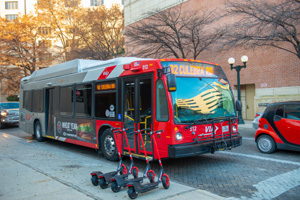
Bus accident claims in Texas are among the most complex personal injury cases because the rules governing them depend entirely on who owns and operates the bus. A crash involving a city transit bus triggers legal requirements that simply do not apply to private charter or tour bus crashes. Getting these distinctions wrong, or missing a critical deadline, can permanently bar an injured victim from recovering compensation regardless of how serious their injuries are.
At Byrd Davis Alden & Henrichson, LLP, our Austin personal injury attorneys have helped Texas bus accident victims understand their rights and recover the compensation they deserve for over half a century. Whether you were injured on a public transit bus, a charter bus, a school transportation vehicle, or any other large passenger carrier, the applicable legal framework matters enormously to your claim.
Why Bus Accident Claims Are Different From Standard Car Accident Claims
Buses are common carriers, a legal category describing transportation services offered to the general public. Common carriers owe their passengers a heightened duty of care, meaning they must exercise greater caution than an ordinary driver would be required to exercise. When a bus company fails to meet this elevated standard and passengers are injured as a result, the company may bear liability for the full extent of those injuries.
Beyond the common carrier duty, bus accidents create additional complexity because crashes often involve multiple injured parties riding the same vehicle. Insurance coverage, liability determinations, and settlement negotiations become more involved when several claims arise from a single event. Bus carriers also typically carry large commercial insurance policies, and their insurers deploy experienced claims teams whose job is to minimize payouts across every claim from a given crash.
City Bus vs. Private Bus: Entirely Different Legal Rules
Claims Against Government-Operated Transit
When a crash involves a public transit bus operated by a governmental entity, such as Austin’s Capital Metro system, claims are governed by the Texas Tort Claims Act (TTCA). The TTCA imposes two critical restrictions that do not apply to private carrier claims.
First, a claimant must provide formal written notice to the governmental unit within six months of the date the injury occurred. Missing this six-month deadline can permanently bar the claim, even if the plaintiff would otherwise have two years under the standard personal injury statute of limitations. The notice must identify the claimant, describe the injury or damage claimed, and state the time and place of the incident. A general phone complaint to transit customer service does not satisfy this requirement.
Second, the TTCA caps governmental liability at $250,000 per person and $500,000 per single occurrence. No matter how severe the injuries, how clear the liability, or how high the victim’s actual damages, a claim against a government-operated transit agency cannot exceed these caps under current Texas law. This makes early, thorough documentation of all damages especially critical in government transit cases, and it makes identifying and pursuing any available non-governmental defendants alongside the transit agency an important strategic consideration.
Claims Against Private Bus Companies
When the bus was operated by a private company, charter service, school transportation contractor, or tour operator, the TTCA’s notice requirement and damage caps do not apply. Private carriers are subject to the standard two-year statute of limitations and are not shielded by governmental immunity. Seriously injured passengers can pursue full compensation, including amounts that far exceed TTCA caps, when the at-fault carrier is a private entity.
Private bus companies operating interstate routes are regulated by the FMCSA. Those operating intrastate routes in Texas are regulated by the Texas Department of Transportation. Violations of applicable regulations can support negligence claims, and in cases of egregious disregard for passenger safety, may support claims for exemplary damages in addition to compensatory ones.
What Determines the Value of a Bus Accident Settlement?
Settlement values in bus accident cases are driven by the same factors that affect all personal injury claims. However, the severity of injuries in bus crashes, particularly those involving large vehicles at highway speeds, often results in higher damages than in typical car accident cases.
Severity and Duration of Injuries
The nature and extent of injuries is the single most significant driver of settlement value. A passenger who suffered a mild concussion and recovered within weeks represents a fundamentally different claim than one who sustained a traumatic brain injury, spinal cord damage, or multiple fractures requiring surgery and extended rehabilitation. Bus crashes can produce catastrophic injuries that require lifetime medical care, and those future costs must be accurately calculated and included in any settlement demand rather than left for the victim to absorb after signing a release.
Lost Wages and Reduced Earning Capacity
When injuries prevent a victim from working, lost wages are recoverable. For injuries that are permanent or long-lasting, reduced earning capacity, meaning the difference between what a victim could have earned before the injury and what they can earn after it, can represent a substantial portion of the total claim. Vocational experts and economists are frequently retained in serious bus accident cases to calculate these figures with the precision that a major damages claim requires.
Pain, Suffering, and Diminished Quality of Life
Texas allows injured parties to recover non-economic damages for physical pain, mental anguish, and the loss of enjoyment of life caused by a crash and its aftermath. These damages are not subject to a cap in private bus accident cases, and they often constitute a meaningful share of the total recovery in cases involving serious or permanent injuries.
Common Causes of Bus Accidents in Texas
Understanding what caused a crash is essential to determining who bears liability. Bus accidents in Texas are frequently caused by driver fatigue in carriers that do not strictly enforce hours-of-service rules, by distracted driving, by inadequate driver training or hiring of unqualified drivers, by deferred maintenance leading to mechanical failures, and by supervisory failures at the carrier level. Identifying the specific cause, and whether it reflects a regulatory violation, shapes both the liability theory and the potential for exemplary damages in egregious cases.
Steps to Take After a Bus Accident in Texas
The actions you take in the immediate aftermath of a bus crash significantly affect your ability to build a strong claim, particularly given the strict notice deadlines that apply to government transit cases.
- Seek medical attention immediately: Adrenaline frequently masks pain and injury in the period right after a crash. A prompt evaluation creates documentation linking your injuries to the accident and protects your health from delayed-onset conditions.
- Identify the bus and operator: Photograph the bus, record the route number, note any fleet identification visible on the vehicle, and get the driver’s name and any badge number they display.
- Collect witness information: Other passengers who witnessed the crash or can describe your condition after impact are valuable witnesses. Get their contact information before leaving the scene.
- Report your injury in writing if a government agency is involved: Verbal notice to a driver or station employee does not satisfy the formal notice requirement. Consult an attorney about how to properly notify a governmental entity within the six-month window.
- Document your losses from day one: Keep all medical records, bills, and any documentation of income you lost because of your injuries.
- Contact an attorney as soon as possible: The six-month government notice deadline runs from the date of your injury, not from when you first consult a lawyer. There is no grace period.
If you are unsure whether the bus involved was government-operated or privately operated, assume the six-month notice deadline applies and consult an attorney immediately. The cost of missing that deadline is the permanent loss of your right to recover.
Frequently Asked Questions About Bus Accident Claims in Texas
What is the deadline to file a claim against Capital Metro or another city transit agency in Texas?
Texas law requires you to provide formal written notice of your claim to a governmental unit within six months of the date the injury occurred. This is separate from filing a lawsuit. It is a condition that must be satisfied before any lawsuit against the agency can proceed. Missing this six-month window is typically fatal to the claim. The standard two-year statute of limitations for filing the lawsuit still applies, but a missed notice deadline bars the case regardless.
Is there a cap on how much I can recover from a city bus accident claim in Texas?
Yes. Under the Texas Tort Claims Act, governmental entities are liable for no more than $250,000 per person and $500,000 per single occurrence, regardless of the actual damages suffered. These caps apply even when medical expenses, lost wages, and pain and suffering losses far exceed those amounts. Private bus companies are not subject to these caps, which is one reason correctly identifying the bus operator early in the process is so important.
Can I sue both the bus driver and the bus company?
Yes. You can bring claims against both the driver and the company. The driver may be personally liable for their own negligent conduct, while the company may be liable under respondeat superior for the driver’s actions and independently for failures in hiring, training, or vehicle maintenance. For private carriers, pursuing both expands the available recovery. For government transit, separate sovereign immunity rules govern how and whether claims can proceed against individual government employees.
I was a passenger on the at-fault bus. Can I still recover compensation?
Yes. As a passenger, you bear no liability for how the bus was operated, and you have full rights to pursue compensation from the at-fault bus company and driver. Your claim follows the same framework as any other bus crash victim, including the six-month notice requirement if the bus was government-operated. The fact that you were riding on the at-fault bus rather than in a separate vehicle does not limit your rights as an injured party.
How long do bus accident settlements typically take to resolve?
Timeline varies depending on injury severity, whether fault is contested, and whether a governmental entity is involved. Government transit claims often move more slowly because of additional procedural requirements and the agency’s internal investigation process. Private carrier cases with clear liability can sometimes resolve more quickly, but serious injury cases typically require reaching maximum medical improvement before settling so that future medical costs can be accurately captured. Multi-plaintiff crashes involving many injured passengers can take substantially longer.
Byrd Davis Alden & Henrichson, LLP has represented bus accident victims in Austin and throughout Central Texas for over half a century. We understand the critical differences between claims against government transit and private carriers, and we know how to move quickly when the six-month notice clock is already running. Our firm has been recognized by U.S. News & World Report as one of the Best Law Firms in the United States, and our attorneys are prepared for every stage of litigation, from initial notice through trial.
If you or someone you care about was injured in a bus accident in Texas, contact our team for a free case evaluation as soon as possible. The deadlines in these cases are unforgiving. Reach out through our contact page to get started today.